Home Equity Theft in the Sunshine State
Updated: Jun 11
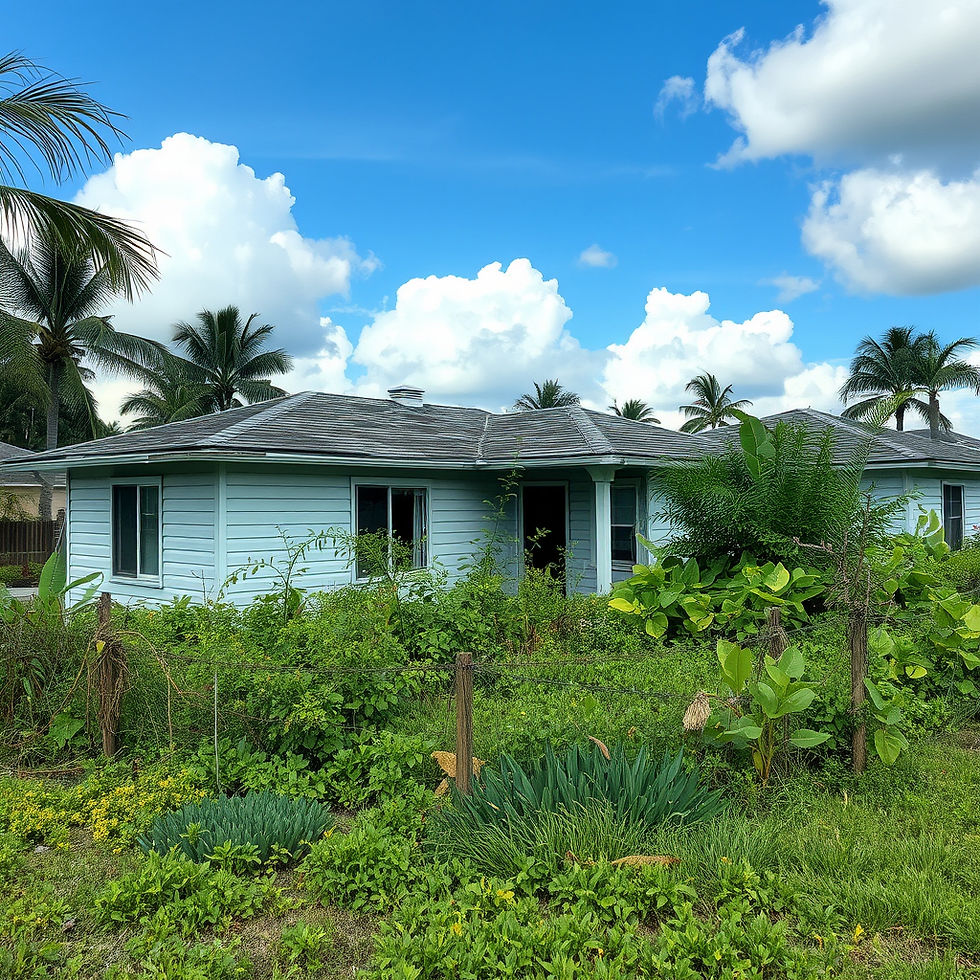
Owning a home in Palm Beach, Florida, is a dream for many. But for some residents, that dream turns into a nightmare when abandoned properties drag down their neighborhood. These neglected homes not only create an eyesore but also steal equity from nearby homeowners, lowering property values and putting the community at risk.
How Abandoned Properties Hurt Communities
In Florida, abandoned properties with unpaid property taxes are treated the same as other tax delinquent properties. This means owners have two years to pay back taxes before foreclosure starts. During this time, neighbors must live with the consequences:
Weeds and vegetation grow unchecked, spreading into adjacent yards.
Fences collapse, leaving properties unsecured.
Trash piles up, attracting pests and creating health hazards.
The overall appearance of the neighborhood declines, discouraging potential buyers.
This process can take two and a half years or more, forcing residents to endure the negative effects for an extended period.
The Financial Impact of Equity Theft
The term equity theft describes how abandoned properties steal value from surrounding homes. When a property sits vacant and neglected, it drags down the market value of nearby houses. Research shows that proximity to an abandoned property reduces home values by about 9.4%.
For example, a home valued at $545,000 could lose approximately $51,230 in equity because of a nearby abandoned property. This loss is not just a number; it affects homeowners’ ability to sell, refinance, or build wealth through their property.
Why States Have Adopted Stricter Foreclosure Processes for Abandoned Properties
The current system used in many states gives property owners ample time to settle unpaid property taxes, but leaves neighbors vulnerable. Other states have adopted faster foreclosure processes for abandoned properties to protect communities. These stricter rules help:
Remove blighted properties more quickly.
Prevent the spread of health and safety risks.
Preserve neighborhood property values.
Reduce the burden on first responders dealing with unsafe properties.
Allowing property owners to neglect their responsibilities for years puts entire communities at risk without consequences.

What Neighbors Can Do
While legislative changes take time, residents can take steps to protect their communities:
Report abandoned properties to local code enforcement or tax offices.
Organize neighborhood watch groups to monitor and document property conditions.
Engage with local officials to advocate for faster foreclosure processes.
Work with community associations to raise awareness about the impact of equity theft.
These actions help build pressure for change and support healthier, safer neighborhoods.
Protecting Your Home and Community
Abandoned properties are more than just an eyesore. They represent a form of equity theft that harms homeowners financially and threatens community well-being. By understanding how property taxes and foreclosure laws affect these situations, residents can better advocate for reforms that protect their investments and quality of life.


Comments